





Bioinks for 3D Bioprinting: Nanoparticle-Containing Bioinks for Cell Culture Scaffolds and Artificial Organs
Introduction
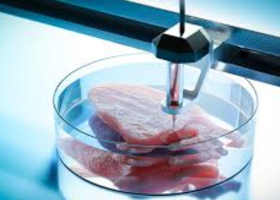
3D bioprinting is revolutionizing the field of regenerative medicine by enabling the fabrication of complex biological structures such as tissues and artificial organs. At the heart of this technology lies bioink, a specialized material that contains living cells and biomaterials used to print biological constructs layer by layer.
Recent advances in nanotechnology have introduced nanoparticle-containing bioinks, which significantly enhance the functionality, stability, and biological performance of printed tissues. These advanced bioinks are now playing a key role in developing cell culture scaffolds, tissue models, and artificial organs.
What Are Bioinks?
Bioinks are biocompatible materials mixed with living cells that can be printed using 3D bioprinters to create tissue-like structures.
A typical bioink consists of:
- Living cells
- Biomaterials (hydrogels such as alginate, gelatin, collagen)
- Growth factors
- Nutrients
- Crosslinking agents
These materials provide a supportive environment that allows cells to attach, grow, differentiate, and form functional tissues.
Role of Nanoparticles in Bioinks
Nanoparticles are extremely small materials with sizes ranging from 1 to 100 nanometers. When incorporated into bioinks, they provide several advantages that improve the performance of bioprinted tissues.
Key Functions of Nanoparticles
Mechanical Strength
Nanoparticles reinforce bioinks, improving scaffold stability and durability.
Enhanced Cell Adhesion
They provide nano-scale surface features that promote better cell attachment and proliferation.
Controlled Drug Delivery
Nanoparticles can release drugs, growth factors, or signaling molecules in a controlled manner.
Electrical Conductivity
Conductive nanoparticles help in printing tissues such as cardiac and neural tissues.
Improved Printability
They enhance viscosity and structural integrity during the printing process.
Types of Nanoparticles Used in Bioinks
Several nanoparticles are commonly integrated into bioinks:
1. Metallic Nanoparticles
Examples: Gold, silver nanoparticles
Applications:
- Antimicrobial scaffolds
- Biosensing
- Enhanced electrical conductivity
2. Ceramic Nanoparticles
Examples: Hydroxyapatite nanoparticles
Applications:
- Bone tissue engineering
- Osteogenic differentiation
3. Polymer Nanoparticles
Examples: PLGA nanoparticles
Applications:
- Drug delivery systems
- Controlled growth factor release
4. Carbon-Based Nanomaterials
Examples:
- Graphene
- Carbon nanotubes
- Applications:
- Neural tissue engineering
- Cardiac tissue development
Nanoparticle-Containing Bioinks for Cell Culture Scaffolds
Cell culture scaffolds are 3D structures designed to mimic the natural extracellular matrix (ECM).
Nanoparticle-based bioinks improve scaffolds by:
- Enhancing cell proliferation
- Improving nutrient diffusion
- Supporting tissue regeneration
- Increasing structural stability
- These scaffolds are widely used for:
- Cancer research models
- Drug testing platforms
- Stem cell differentiation studies
- Tissue regeneration research
Applications in Artificial Organ Development
One of the ultimate goals of 3D bioprinting is the fabrication of functional artificial organs to address the shortage of organ donors.
Nanoparticle-containing bioinks help achieve this by:
- Improving vascularization
- Enhancing cell survival
- Promoting tissue maturation
- Enabling functional tissue integration
- Potential artificial organs being researched include:
- Artificial skin
- Liver tissue constructs
- Kidney models
- Cardiac tissue patches
- Cartilage and bone implants
Challenges in Nanoparticle Bioinks
- Despite their advantages, several challenges remain:
- Nanoparticle toxicity at high concentrations
- Uniform distribution within bioinks
- Maintaining cell viability during printing
- Regulatory and safety concerns for clinical applications
- High production costs
- Ongoing research is focused on developing biocompatible and biodegradable nanoparticles to overcome these limitations.
Future Perspectives
The future of nanoparticle-based bioinks is extremely promising. Emerging innovations include:
- Smart bioinks that respond to environmental stimuli
- 4D bioprinting with shape-changing biomaterials
- Integration of AI-driven bioprinting systems
- Personalized patient-specific organ printing
These technologies could transform regenerative medicine and eventually enable on-demand organ fabrication.
Conclusion
Nanoparticle-containing bioinks represent a significant advancement in 3D bioprinting technology. By enhancing mechanical strength, biological performance, and functional properties, these advanced bioinks are enabling the development of high-performance cell culture scaffolds and artificial organs.
As research continues to progress, nanoparticle-based bioinks may play a crucial role in solving the global challenge of organ shortages and revolutionizing the future of healthcare.
Comments
Latest TrendShabana V
10 Apr 2026Incredible to see how nanotechnology is bridging the gap between simple cell scaffolds and functional artificial organs. A huge step forward for regenerative medicine
Sidharth krishna.K
10 Apr 2026The importance of nanochemistry is very relevant and through this bioink studies... the practical advancements in the field is remarkable... the characteristics of this invention is truly game changing in many fields including medical... looking forward for more